



Project background
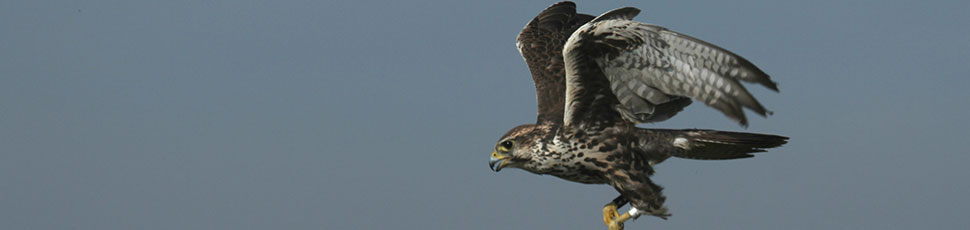
The project aims to support the conservation of a globally endangered species of bird of prey, the Saker Falcon (Falco cherrug), which is in line with one of Nando Peretti Foundation's basic goals as it is written among the Foundation's principles.
The targeted species was formerly distributed across the steppe zone of Eurasia, however the world population dropped alarmingly in the last decades and now the entire global population is 17.000 pairs at maximum, but more likely it does not reach 10.000 pairs. The bulk of the population lives in Asia.
The European population almost became extinct by the 1980s. Due to strong conservation efforts mainly in Hungary and partly in Slovakia, the population was stabilized and it is slowly increasing now. Recently, there are about 350 pairs in Central-Europe (most of them in Hungary, Slovakia, Serbia and a few pairs in Austria, the Czech Republic, Romania and Croatia). There is a separated population in Ukraine with about 300 pairs. Despite the conservation efforts, there are still a lot of negative impacts on the falcons: habitat loss, electrocution, wind farms, poisoning, shooting and illegal trapping that are not easy to handle. Another serious problem is that those problems are known and treated only in the breeding range, but there are no conservation actions taken on the migration routes and in the wintering areas.
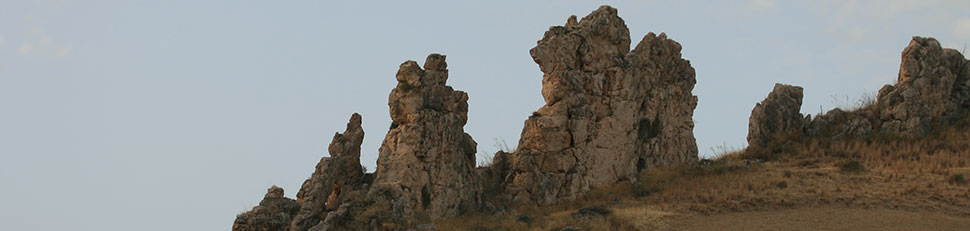
Ringing and satellite-tracking of Sakers proved us - especially those carried out in the frame of the projects LIFE06 NAT/HU/000096 and LIFE09 NAT/HU/000384 - that most of the migrating juvenile Sakers fledged in Central-Europe spend the winter in Italy (the species does not breed in Italy though). Italy is an important wintering site for the Central- European Saker Falcons, however most of those sites lack any conservation measures and every year the Central-European Saker population loses a good number of birds in Italy due to yet unknown reasons. A few wintering Sakers stay around Rome, however the majority of the birds choose Sicily for winter. However, this latter site is apparently very dangerous for Sakers: satellite-tracking has shown that more than the half of the juvenile Sakers wintering in Sicily never returns in spring - they perish for unknown reasons. Satellite-tagged birds were tracked to Sicily until their transmitter stopped signaling, but unfortunately none of the dead birds were find later by the local Italian colleagues, who went to the field to search them.
Obviously, this loss has a measurable negative impact on the breeding population as well. We suppose that hunting, electrocution and wind farms may be the main mortality factors, however we do not have any background information supporting our theory, thus we cannot create an action plan and to take the necessary steps, working together with our Italian colleagues.
Now that the population in Central-Europe appears to be stable although still vulnerable, and threats and main mortality factors have been - better or worse, but yet - addressed in the breeding range in the last decades, we do think that the new challenge is to protect our birds far away from the breeding ground. At the moment it is the most important thing that we can do to increase the survival rate of birds, and ensure the future growth of that small Central-European population.
The project, which received a grant from the Nando Peretti Foundation, is a joint effort of birds of prey experts of MME/BirdLife Hungary and the University of Palermo to survey the wintering sites of endangered Saker Falcons in Sicily including habitats and major mortality factors (threats) on them (e.g. hunting, poisoning, presence/plans of wind farms, trapping, etc.), to evaluate the habitats of Sicily to map potential, but yet unknown wintering sites, to prepare a conservation plan for Sicily and to raise the awareness on the winter presence of Saker Falcons among stakeholders thus to enhance conservation efforts on the major wintering area of Central European population of the species.